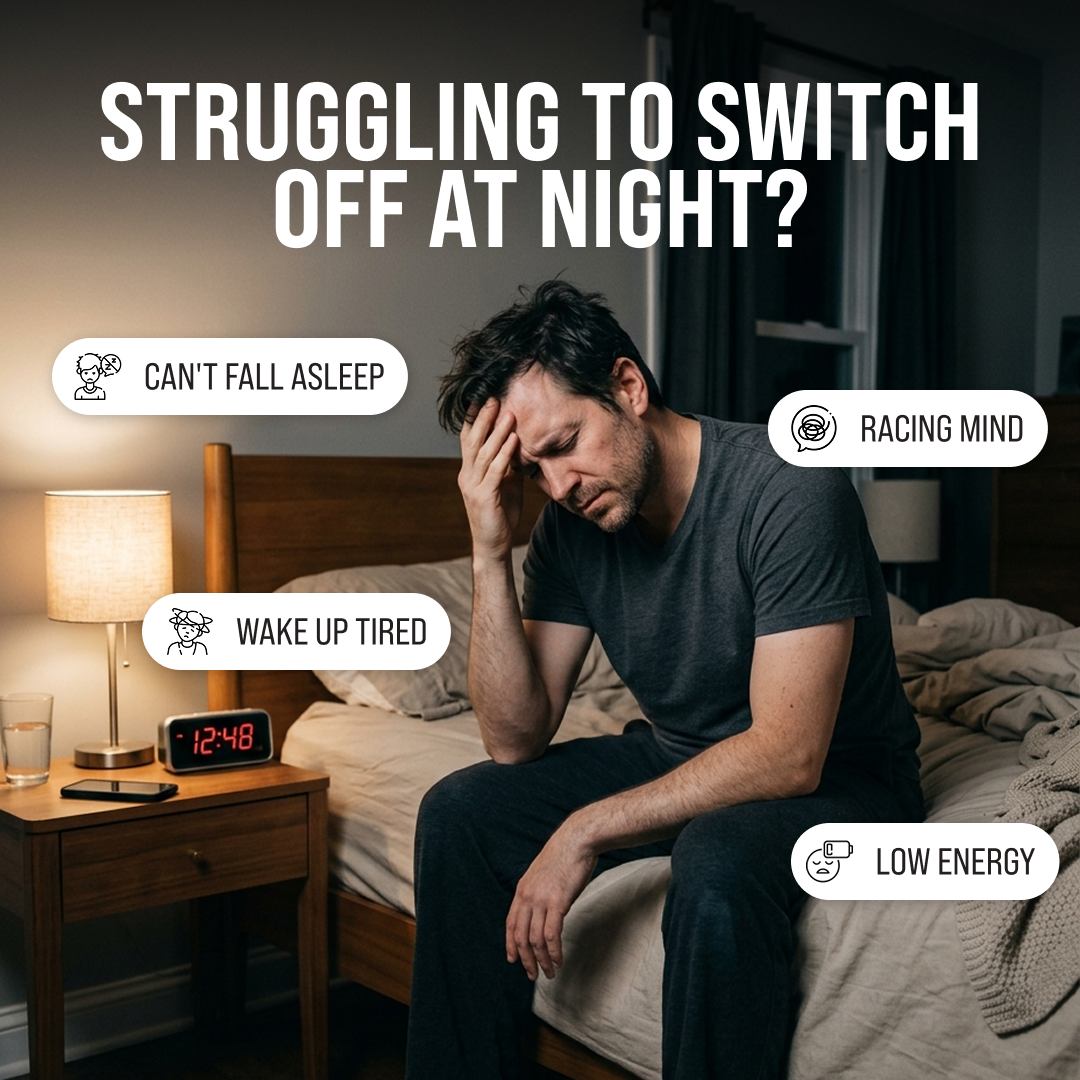
You've trained hard, you're physically exhausted, and you should fall asleep the moment your head hits the pillow. Instead you're wide awake at midnight, staring at the ceiling, wondering why your body is working against you.
This is one of the most common complaints from athletes who train in the evenings — and there are very specific physiological reasons it happens.
The Core Problem: Exercise Activates Your Sympathetic Nervous System
Training — particularly high-intensity training — activates the sympathetic nervous system, the "fight or flight" branch of your autonomic nervous system. Your heart rate rises, adrenaline and noradrenaline are released, core body temperature increases, and your brain enters a state of heightened alertness.
This is exactly what you want during a session. The problem is that these physiological states don't switch off the moment you finish your last set. Depending on training intensity, it can take 2–4 hours for the body to return to a parasympathetic state conducive to sleep.
The Role of Cortisol
Exercise elevates cortisol — your primary stress hormone. Under normal circumstances, cortisol follows a diurnal pattern: high in the morning (helping you wake and feel alert), declining through the day, and low in the evening (supporting sleep onset). Evening training disrupts this pattern by artificially spiking cortisol at exactly the time it should be falling.
For some people, this cortisol spike resolves within an hour or two. For others — particularly those already carrying high stress loads from work or life — it can take much longer.
Core Temperature and Melatonin
Your body needs to drop its core temperature slightly to initiate and maintain sleep. Exercise raises core temperature significantly. Cold showers post-workout can help accelerate this process, but it still takes time.
Additionally, melatonin — the hormone that signals to your brain that it's time to sleep — is suppressed by both bright light and elevated core temperature. If your gym is brightly lit and you go straight from session to screen, you're stacking two melatonin suppressors back to back.
Practical Fixes
Time your training strategically: If possible, finish training at least 2–3 hours before bed. Even shifting from 9pm to 7pm can make a significant difference.
Post-workout cool-down: A cold or cool shower post-session helps accelerate the drop in core body temperature and parasympathetic recovery.
Dim the lights: After training, shift to dim, warm lighting. This signals the start of the melatonin window.
Avoid caffeine after midday: Caffeine's half-life is 5–6 hours. A pre-workout taken at 6pm still has significant caffeine in your system at midnight.
Supplement strategically: This is where the right supplements make a meaningful difference:
- L-Theanine promotes alpha brain wave activity — a state of calm alertness that bridges the gap between post-workout arousal and sleep readiness
- Ashwagandha has well-evidenced cortisol-lowering effects, directly addressing the hormonal driver of post-workout wakefulness
- Magnesium bisglycinate activates GABA receptors and supports muscle relaxation — addressing both the neurological and physical components of post-workout restlessness
- Reishi supports parasympathetic nervous system activity and has demonstrated sleep-improving properties
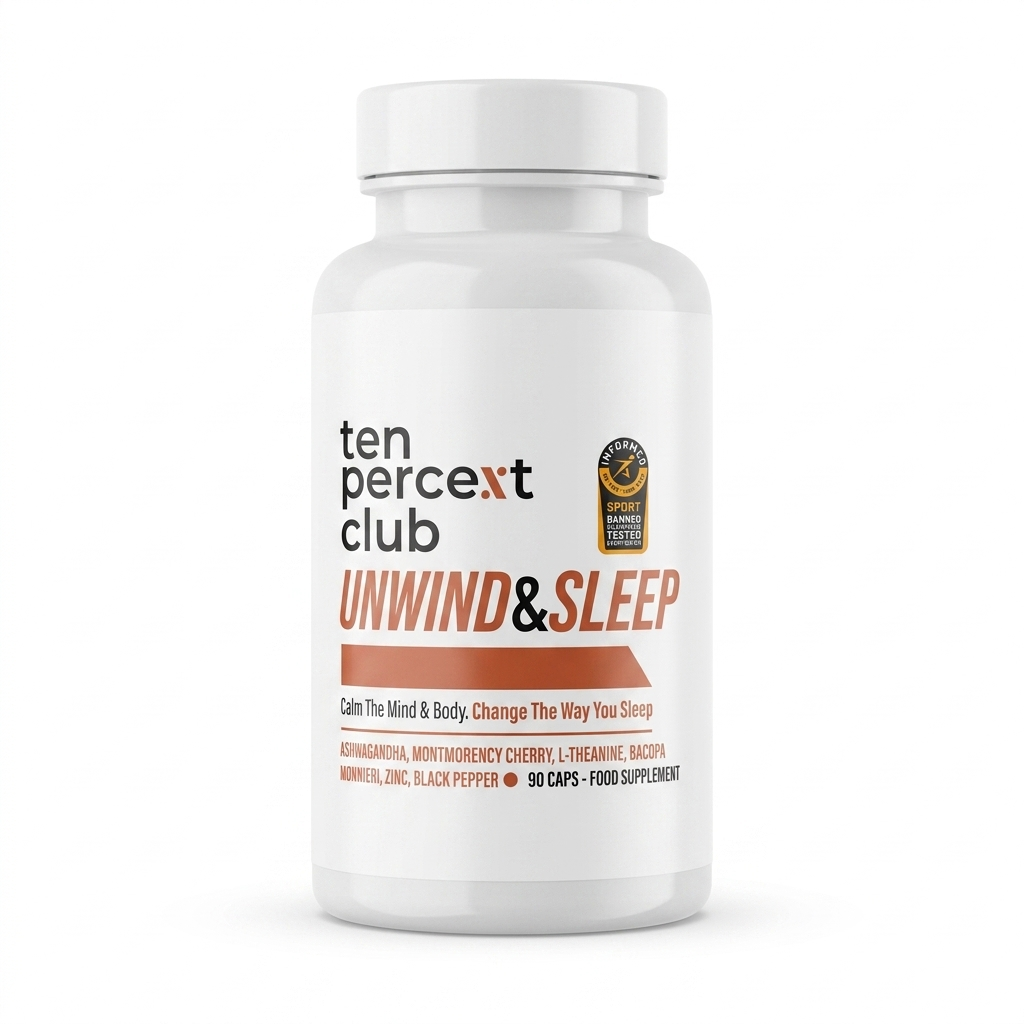
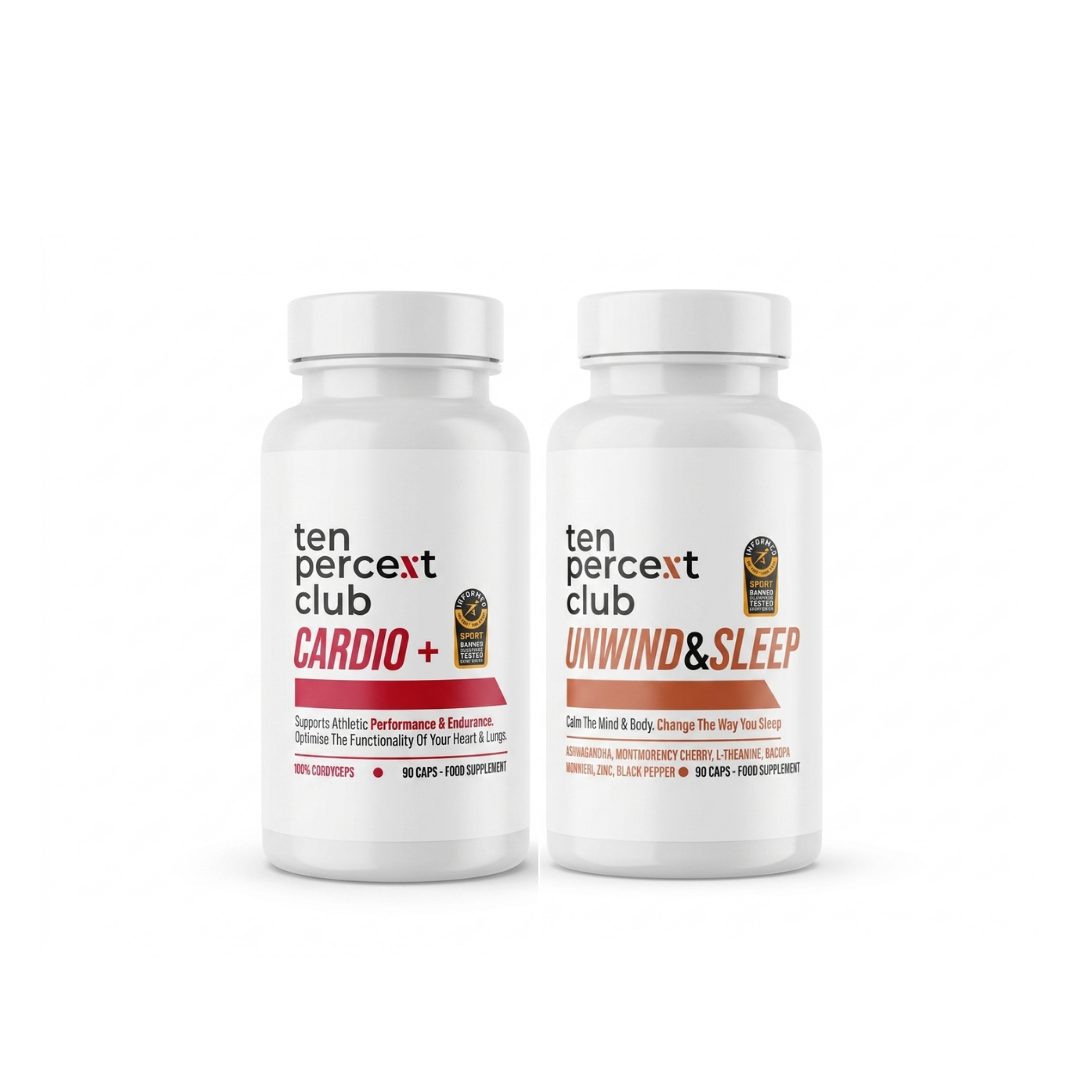
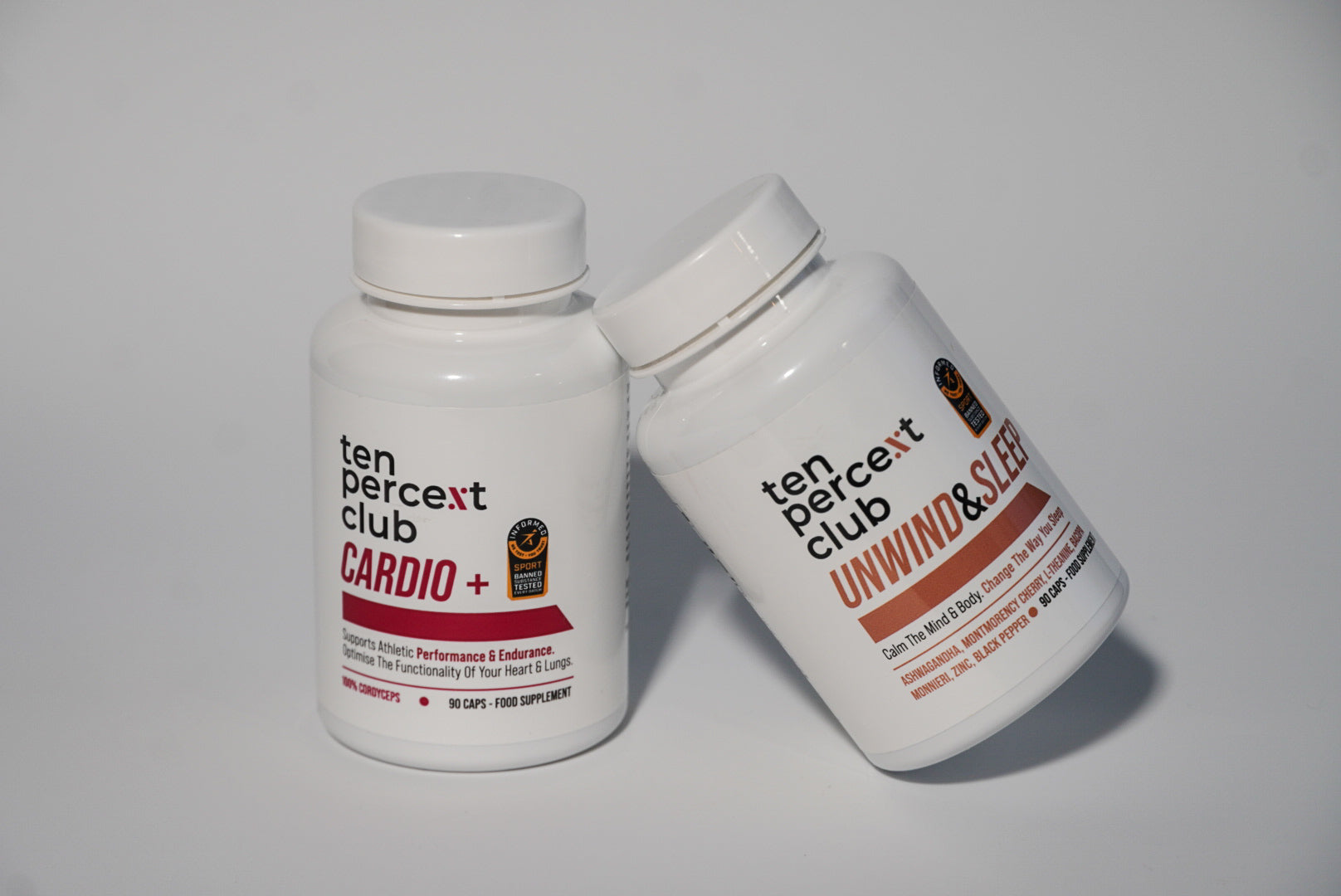
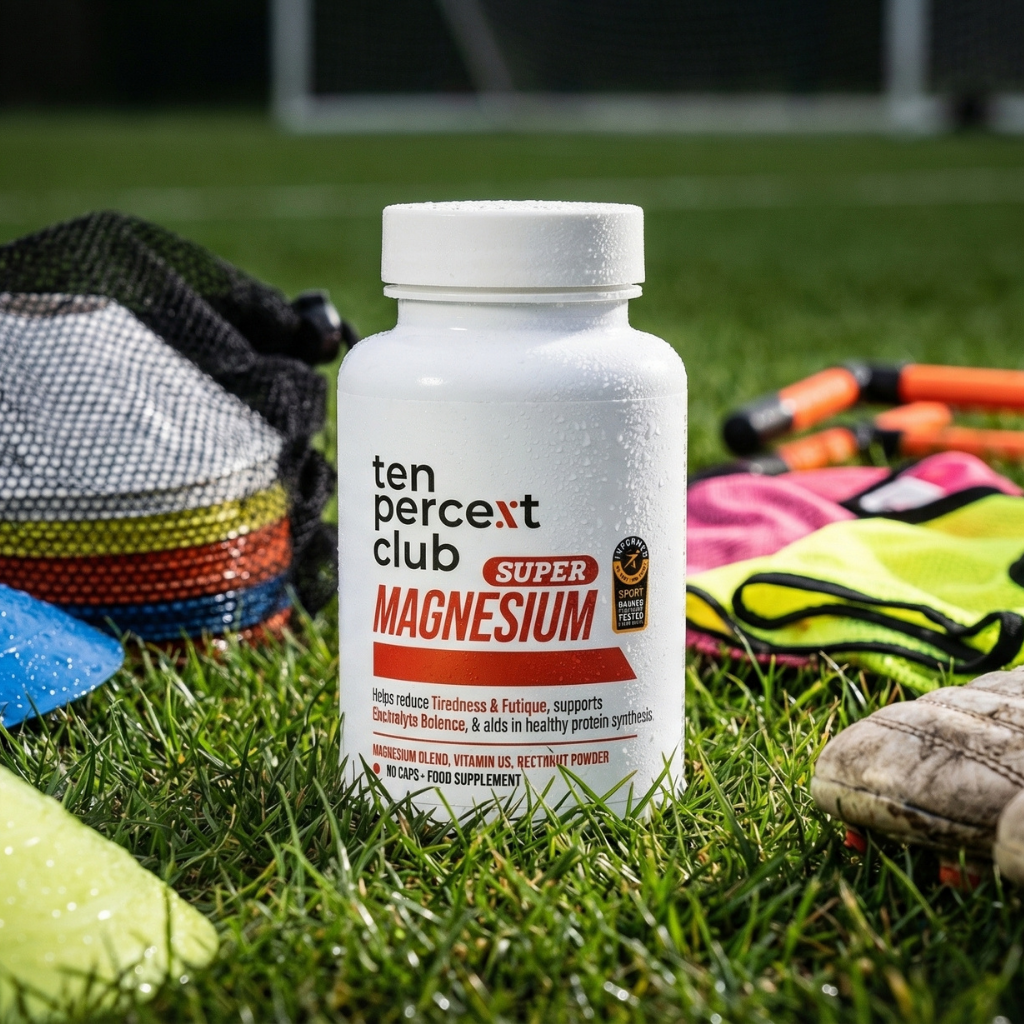
Ten Percent Club's Unwind & Sleep Blend combines ashwagandha, L-theanine, and reishi in a single formula designed precisely for this scenario. Take it in the final hour of your cool-down window. Super Magnesium alongside it completes the stack.
The Evening Training Sleep Stack
Unwind & Sleep Blend — Ashwagandha, L-theanine & reishi to ease the transition from training to sleep
Super Magnesium — GABA activation and muscle relaxation support
Shop Sleep Blend → Shop Magnesium →Train in the evening. Sleep like you didn't.
Informed Sport certified sleep supplements built for athletes.
Shop Unwind & SleepFurther reading: How to Improve Sleep Quality Naturally · Magnesium for Sleep and Recovery