

You're midway through a run, a boxing session, or a hard set in the gym — and your calf, hamstring, or foot suddenly seizes up. Muscle cramps are one of the most frustrating and common problems in sport, yet the advice most people receive is oversimplified and often wrong.
"Drink more water" is the typical response. But if hydration alone solved it, cramps wouldn't be nearly as common as they are. Here's what's actually going on — and what to do about it.
What Causes Exercise-Associated Muscle Cramps?
The honest answer is that the exact mechanism isn't fully agreed upon in sports science. Two leading theories dominate:
The electrolyte depletion theory
This is the older and more widely known model. When you sweat, you lose sodium, potassium, magnesium, and other electrolytes. As electrolyte concentrations in the extracellular fluid drop, the electrical environment around muscle fibres becomes disrupted, increasing their excitability and making spontaneous contractions more likely.
The neuromuscular fatigue theory
More recent research suggests cramps are primarily a neuromuscular phenomenon — fatigued muscles lose the inhibitory reflex that normally prevents them from over-contracting. This explains why cramps tend to occur later in exercise and in already-fatigued muscle groups.
The reality is likely a combination of both — electrolyte depletion lowers the threshold for cramps, and neuromuscular fatigue triggers them.
Why Sodium Is the Key Electrolyte
Of all the electrolytes, sodium has the strongest association with exercise-associated cramps. Studies on endurance athletes and team sport players consistently show that those who cramp have lower plasma sodium levels and higher sweat sodium losses than those who don't.
If you're a "salty sweater" — you notice white residue on your skin or kit after training — you're likely losing more sodium than average, and you're at higher cramp risk as a result.
Plain water rehydration without sodium replacement can actually worsen the situation by further diluting plasma sodium. The fix isn't just drinking more — it's drinking smarter.
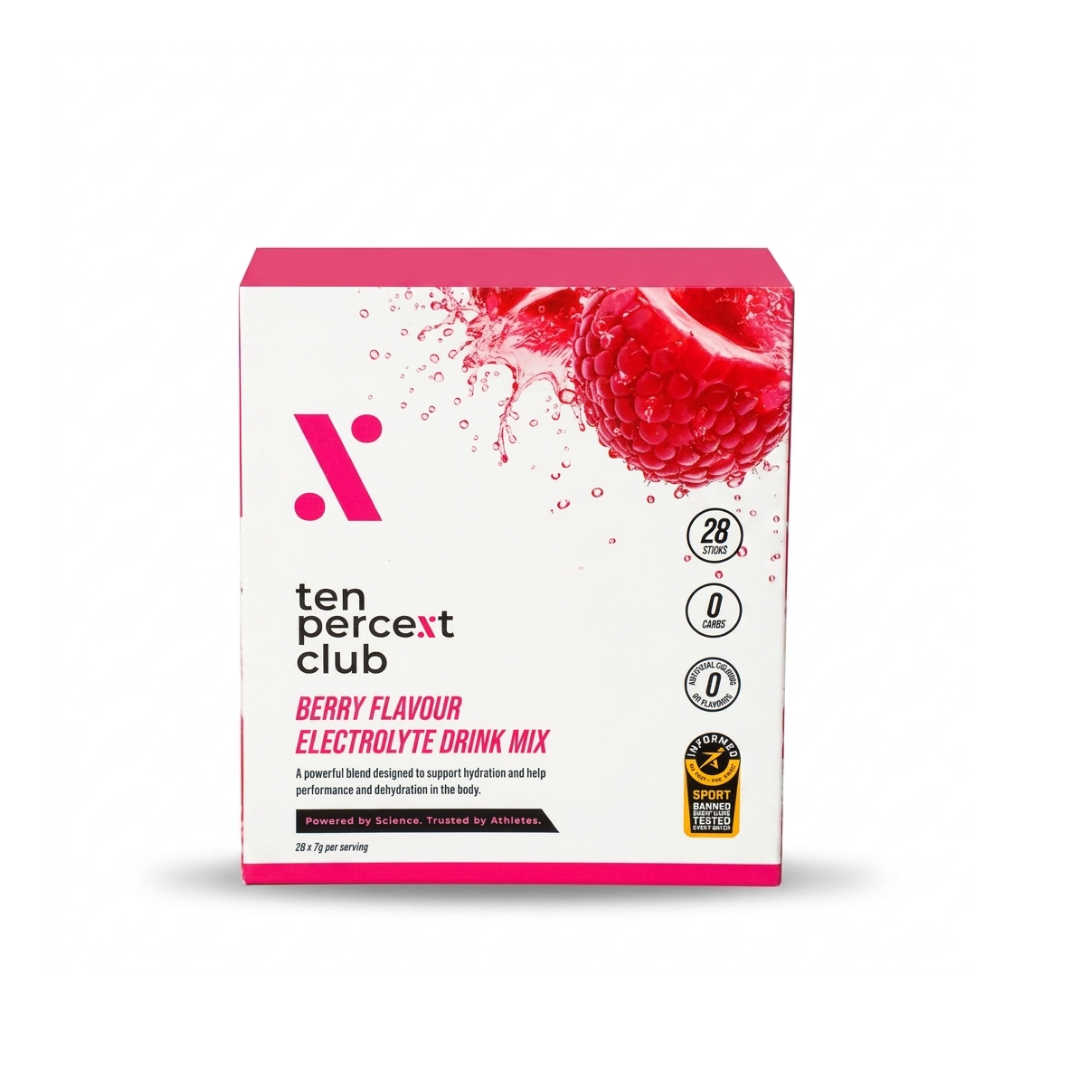
Slip & Flow Electrolytes from Ten Percent Club contains 770mg of sodium per serving — a meaningful, physiologically relevant dose designed to replace what's actually lost in sweat, not just provide a token amount.
Slip & Flow Electrolytes
770mg sodium · Potassium · Magnesium · Vitamin C · Informed Sport certified · No fillers
Shop Slip & Flow →The Role of Magnesium
Magnesium is involved in muscle relaxation — it acts as a natural calcium antagonist, helping muscles release after contraction. Low magnesium is associated with increased muscle excitability and nocturnal cramps (the kind that wake you up at night).
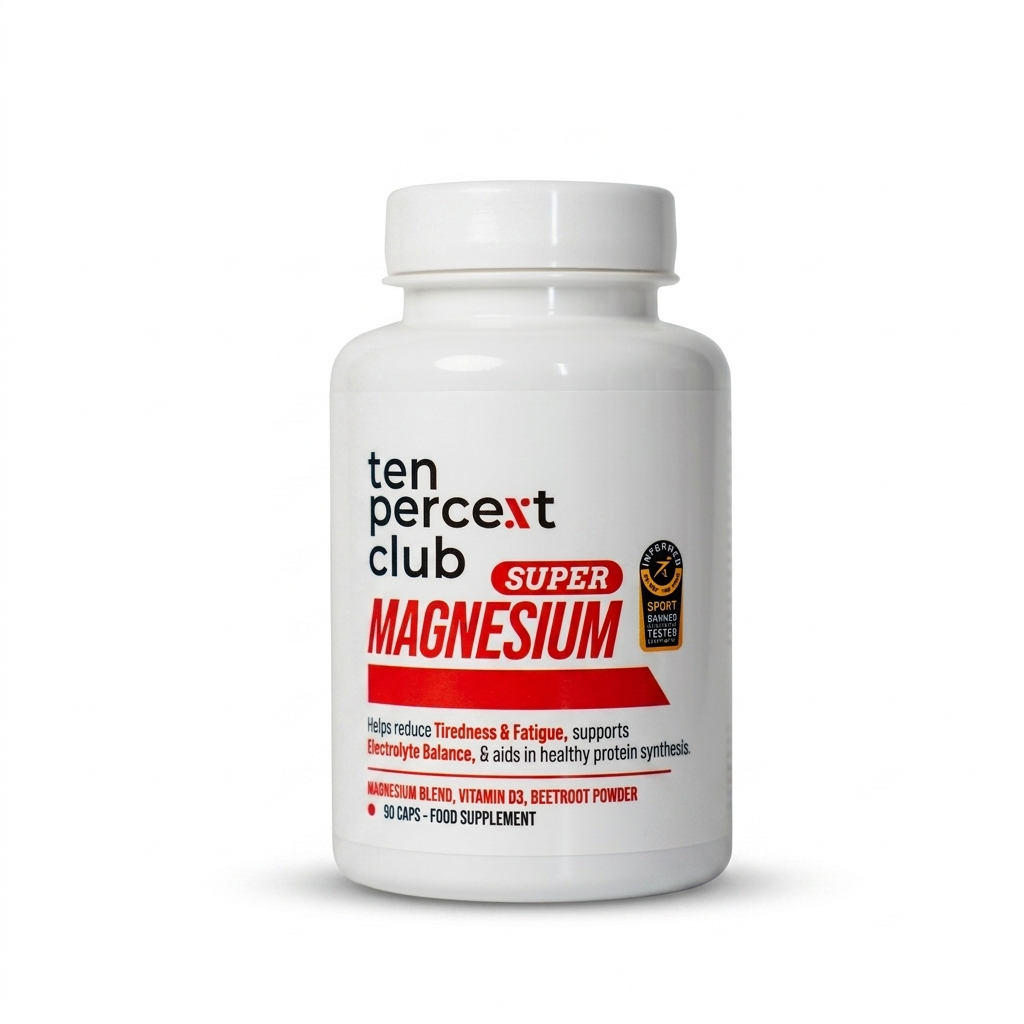
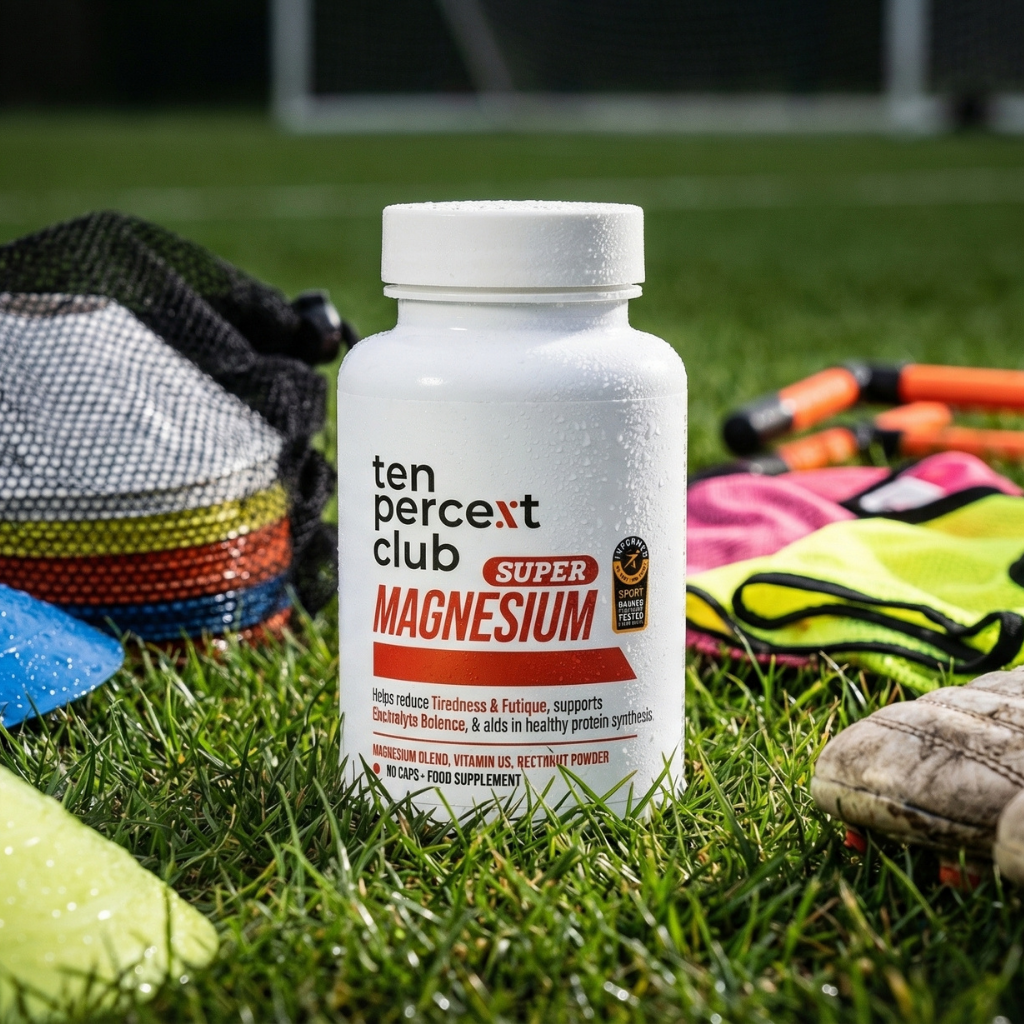
Athletes who train frequently are at elevated risk of magnesium deficiency due to losses in sweat and increased physiological demand. Super Magnesium (bisglycinate form) taken in the evening supports both muscle relaxation and sleep quality.
Other Contributing Factors
- Inadequate warm-up: Cold, unprepared muscles cramp more readily
- Overstriding or poor biomechanics: Creates uneven muscular load
- Sudden increases in training volume or intensity: Neuromuscular fatigue threshold drops
- Caffeine and alcohol: Both have mild diuretic effects that accelerate electrolyte depletion
- Hot conditions: Higher sweat rate means faster electrolyte loss
The Fix — A Practical Protocol
- Before training: Hydrate with electrolytes, not just water — particularly in warm conditions or for sessions over 60 minutes
- During training: Sip electrolyte drink rather than plain water for sessions over 60–90 minutes
- After training: Rehydrate with electrolytes to replace what was lost
- Daily: Ensure dietary magnesium is adequate — supplement with bisglycinate if training load is high
- Night cramps specifically: Evening magnesium supplementation is particularly effective
Stop training around cramps. Start fixing the root cause.
Informed Sport certified electrolytes and magnesium — built for athletes.
Shop Electrolytes Shop MagnesiumFurther reading: Why Electrolytes Matter More Than You Think · Magnesium for Sleep and Recovery